


Respectability politics often presents itself as a strategy for progress, but it quietly raises a more troubling question: who is being asked to stand aside in order to make that progress seem acceptable?
This is why the debate over Matthew Vines’ argument cannot be reduced to a disagreement over vocabulary. The issue is not simply whether every LGBTQ+ person should identify with the word queer. No one should be forced to adopt a label that feels alien or carries personal pain.
What is really at stake is whether a movement committed to inclusion can remain true to that commitment while drawing boundaries around those who are easiest to explain, easiest to defend, or least likely to unsettle the broader public.
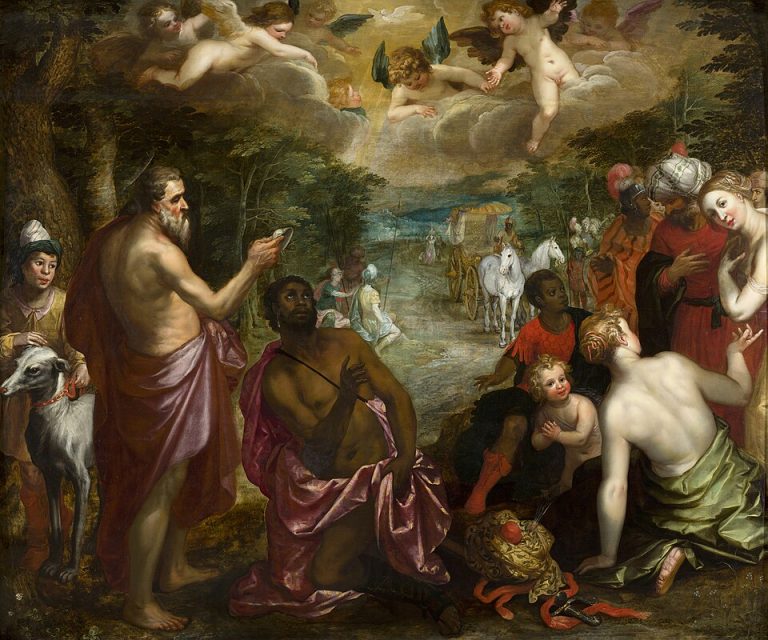
A helpful parallel can be found in the story of the Ethiopian eunuch in Acts 8.
The eunuch is not presented as someone casually indifferent to religious belonging. He is a serious seeker. He has travelled to Jerusalem to worship. He is reading Isaiah. He is doing what a devout person might reasonably be expected to do. And yet, because he is a eunuch, he also carries in his body a condition that placed him at the margins of full religious acceptance under the purity codes of his tradition.
So when he asks Philip, “What is to prevent me from being baptized?” the question is not merely procedural. It is existential and communal. He is asking whether this new Jesus movement will reproduce the exclusions he already knows. Will his body still be treated as disqualifying? Will his difference still require explanation, exception, or delay? Is there some further standard of acceptability he must satisfy before he can be received?
What prevents this person from full belonging?
The answer in the narrative is strikingly direct: Philip baptizes him. The story does not pause to resolve his social ambiguity, domesticate his difference, or make him more legible to the existing religious order. His inclusion is not deferred until he can be made respectable.
That does not settle every modern debate about identity, language, sexual ethics, or political strategy. But it does offer a caution. When a community’s instinct is to preserve public acceptance by narrowing the circle around those who appear most understandable, most respectable, or least disruptive, it risks repeating the very pattern the story interrupts.
The eunuch’s question remains a searching one: What prevents this person from full belonging?
If the answer is simply that their presence complicates our public message, unsettles inherited categories, or makes acceptance by the majority more difficult, then the problem may not be with the person seeking inclusion. The problem may be with the terms on which respectability is being negotiated.
The corollary is not that communities can never have moral discernment. It is that discernment must not be confused with exclusionary gatekeeping. Nor should a desire for public approval become the measure of who is safe to welcome.
The story of the eunuch presses the issue plainly: a movement shaped by inclusion cannot make respectability the condition of belonging.
In an ea rly blog post entitled, “Is Being Transgender Scriptural?“, Lisa shares how this passage about the Ethiopian eunuch helped her accept that she was a trans person and embrace her identity.
Read more of her story in her updated memoir, Then This Happened: After Transparently.